Guides
For Skiers Who Want More: The Best Advanced Terrain in North America
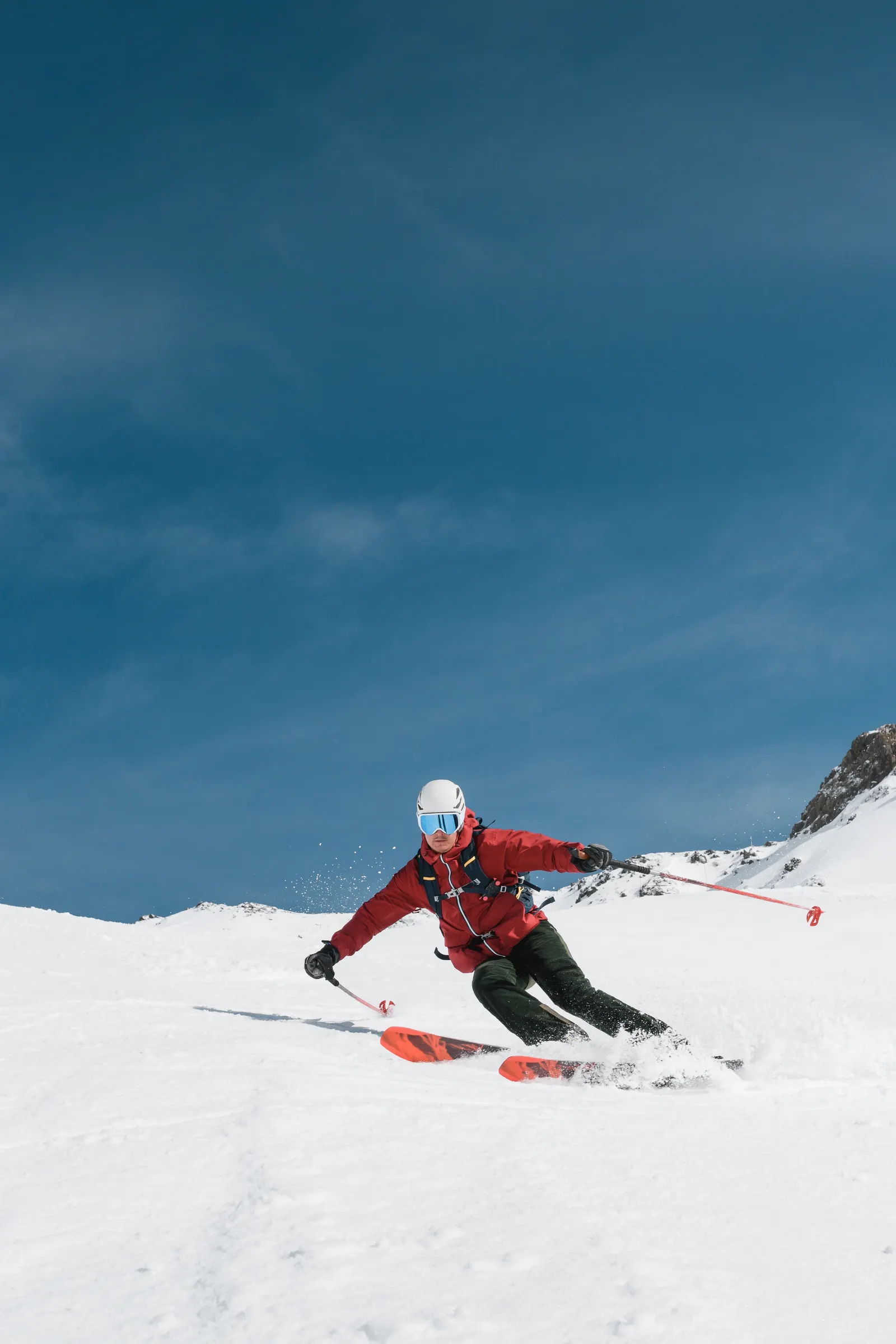
Some mountains simply ski harder, with high-consequence drop-ins and narrow couloirs that demand precision and confidence. While these ski areas have plenty of terrain for beginner and intermediate riders, they’re best known for attracting advanced and expert skiers looking for an additional thrill or the satisfaction that comes from getting safely to the bottom of a hard-to-ski line.
At these ski areas, skiers and riders looking to move beyond the relative comfort of standard black-diamond runs will find terrain that tests their skill and their nerve. Some mountains are so challenging that advanced and expert runs account for 50 percent of the ski resort’s skiable acreage, while others are defined by notoriously difficult runs where tight trees, narrow couloirs, cliff drops, and entry points with nonnegotiable free fall separate the adventurous from the truly experienced.
S&S Couloir
Jackson Hole, Wyoming
- Ikon
- Mountain Collective
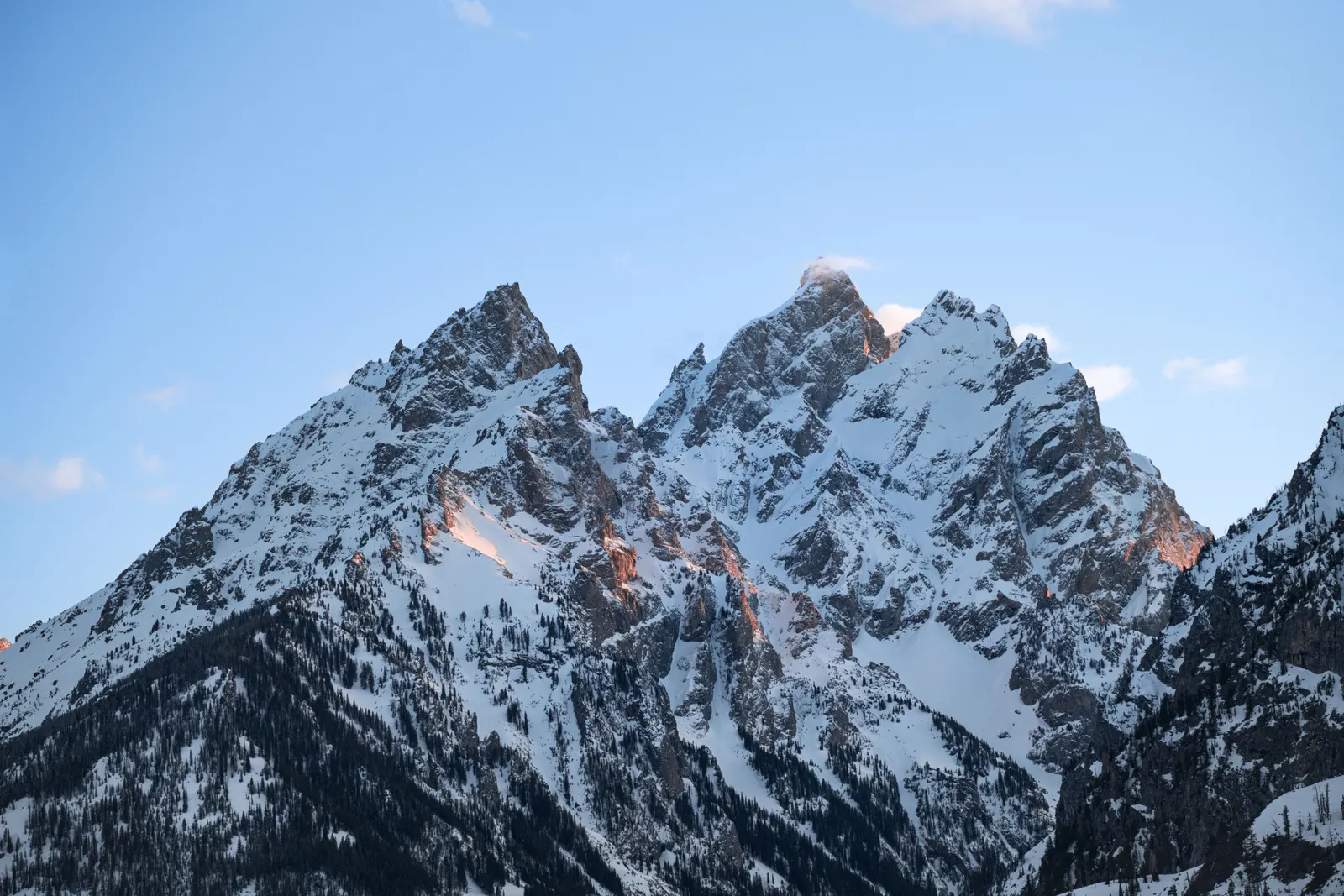
This list wouldn’t be complete without Jackson Hole Mountain Resort, which is arguably the most recognizable expert-ski destination in North America. The mountain is famously home to Corbet’s Couloir, a narrow chute that is only accessible by dropping off a massive snow cornice above and free falling for up to 20 feet. (It’s also the site of the annual, invite-only Kings & Queens of Corbet’s event in February, where experienced freeriders throw down their best trick as they launch themselves into the couloir.) But the often-overlooked S&S Couloir, which sits right next to Corbet’s, is considered much more difficult and is only attempted by a few people each winter.
Jackson’s couloirs get all the attention but the entire ski area is riddled with challenging, travel-worthy terrain. Of the mountain’s 2,500 acres of inbound terrain, 50 percent has a black diamond rating, and it all skis steep with one of the biggest vertical drops in the U.S. at 4,139 feet.
Little Couloir
Big Sky, Montana
- Ikon
- Mountain Collective
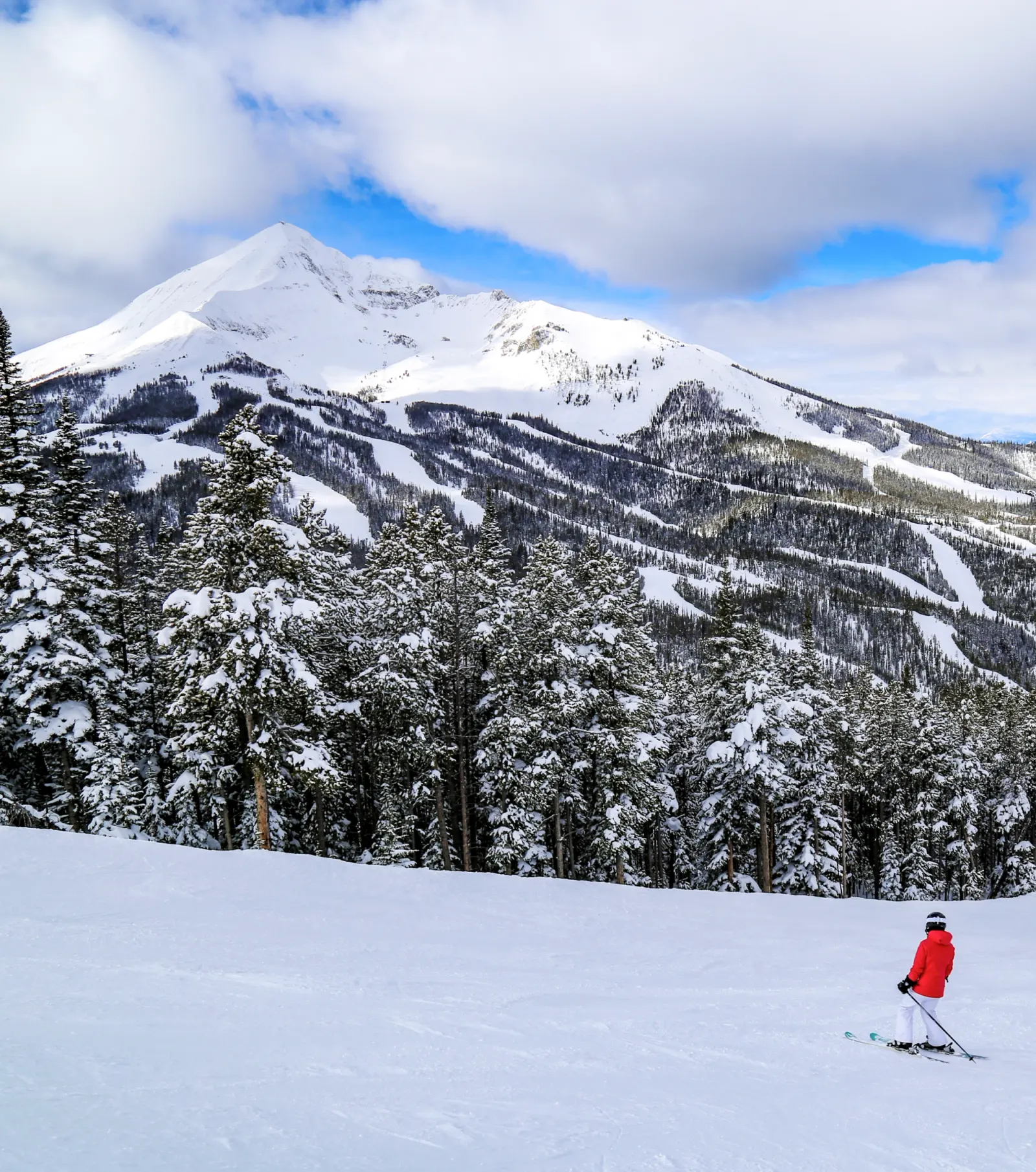
Like Jackson, half of the terrain at Big Sky Resort has a black-diamond rating. But at Big Sky, they take it a step further by adding a three black diamond rating to certain runs. This extra-extreme terrain starts at the top of the Lone Peak Tram and feeds into the Big Couloir and the Upper A-Z Chutes. The Little Couloir, to the looker’s left of the Big Couloir, isn’t even on the ski area’s official trail map because it’s only open a few days a year and is the epitome of extreme, high-consequence skiing.
Big Sky also has a lot of terrain to explore, 5,850-acres of it, with a huge vertical drop of 4,350 feet.
Senior's (Palmyra Peak)
Telluride, Colorado
- Epic
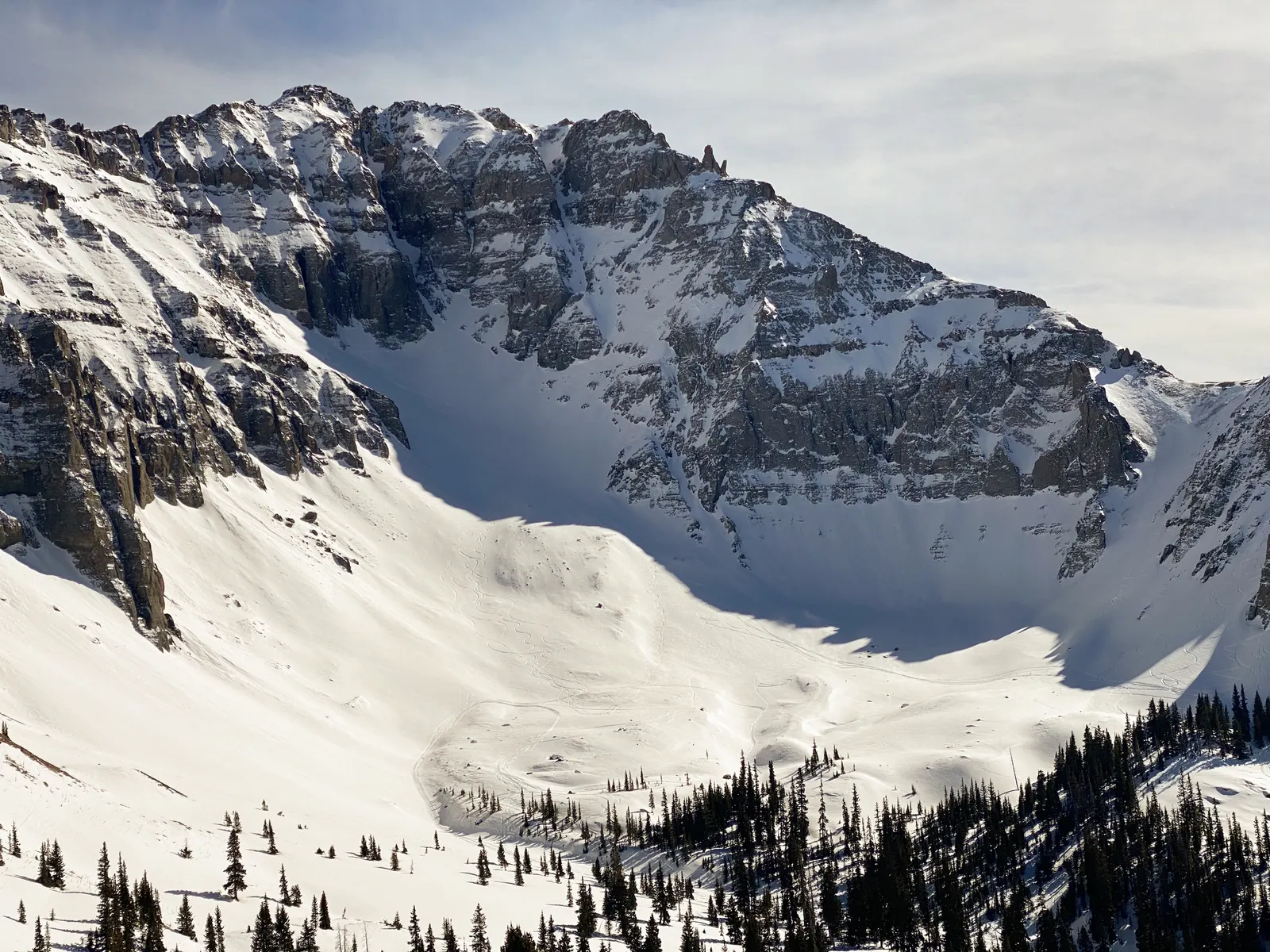
What makes Telluride Ski Resort stand out is its expansive hike-to terrain and the fact that you can ski off a 13,000-foot mountain peak without going out of bounds or into the backcountry. Palmyra Peak, which stands at 13,150 feet and is a 90-minute hike from the chairlift, is where the mountain’s hardest run, Senior’s, can be found. Senior’s runs through a narrow couloir and is considered to have a 52-degree pitch.
On either side of Palmyra Peak is additional hike-to terrain, including narrow chutes that are accessed by the Stairway to Heaven, a 126-foot metal staircase and bridge that’s bolted into the ridgeline.
Telluride is smaller than Jackson or Big Sky, but generally steeper, with 4,425 feet of vertical gain. Of the ski area’s 2,000 skiable acres, 41 percent is rated as expert.
Kiwi Flats
Mammoth, California
- Ikon
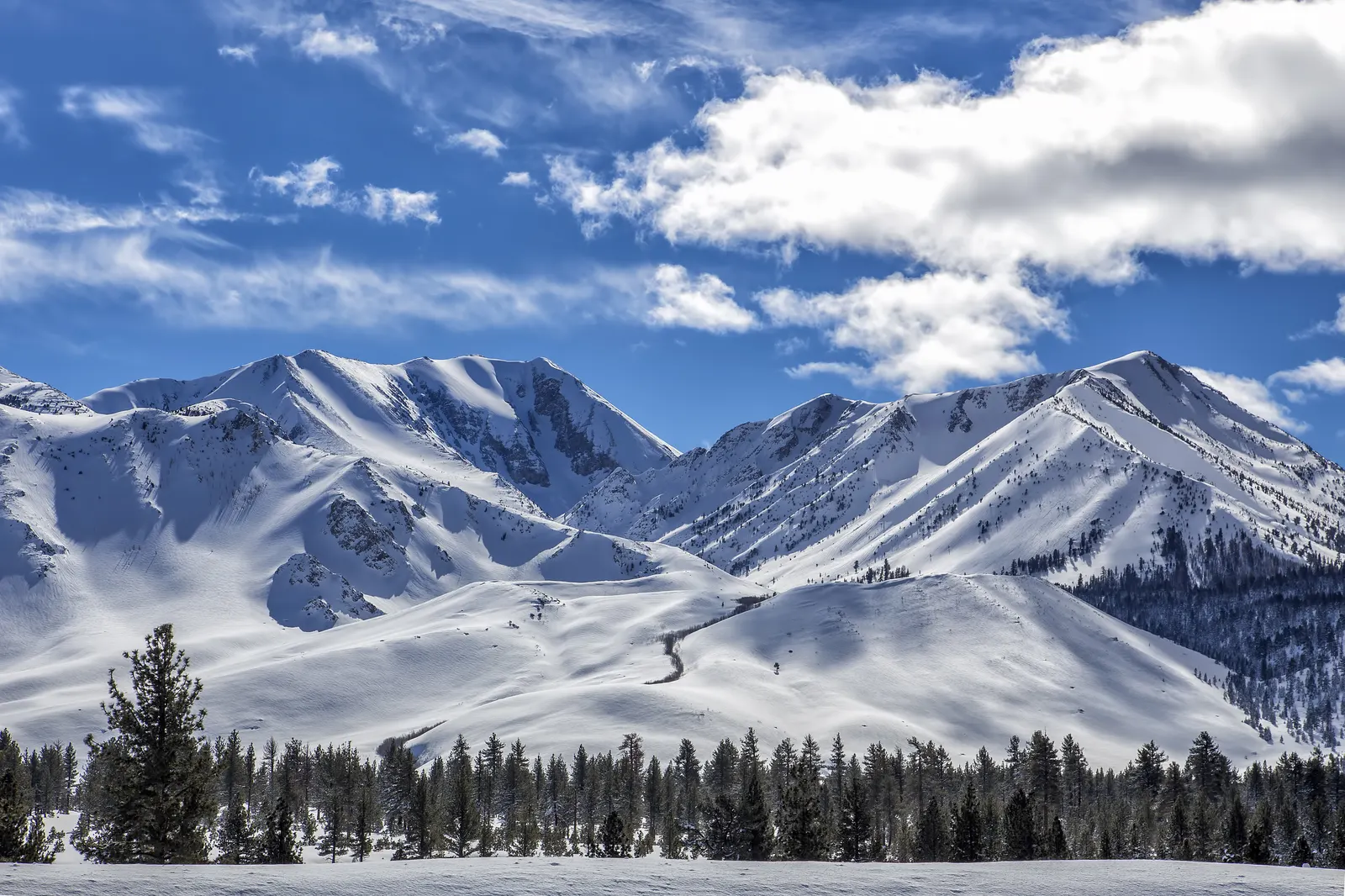
Mammoth Mountain is one of the rare mountains that has both steep, advanced ski runs and renowned terrain parks that keep even the best park skiers challenged. For the former, head to Cornice Bowl or visit Paranoid Flats and Kiwi Flats (which are not flat at all). Kiwi Flats is a mind-spinningly long couloir with a cliff in the middle. Another extreme Mammoth favorite is Hangman’s Hollow, which provides mandatory air on entry and requires skiers to fully commit.
Mammoth is also home to the Unbound Terrain Parks, which include two black-diamond-rated parks—Main Park and The Hemlocks—among its 10 total. The massive network has more than 80 features, including two halfpipes.
Filip's Leap (Highland Bowl at Aspen Highlands)
Aspen Snowmass, Colorado
- Ikon
- Mountain Collective
Aspen Snowmass is made up of four mountains: Aspen Highlands, Aspen Mountain (aka Ajax), Snowmass, and Buttermilk. All but Buttermilk are known for their steep, advanced terrain, particularly Aspen Highlands, which is home to Highland Bowl, a hike-to descent with a challenging 2,500-foot drop from a 12,392-foot summit.
Nearby Aspen Mountain is known for its tight trees and bump runs, including the Elevator Shaft section of Silver Queen, a steep 42-degree slope. Snowmass, the largest of the four, keeps expert skiers challenged with Hanging Valley, the Cirque, and the Headwall—along with Burn Cliffs, accessed via the Cirque, which has been named among the hardest runs in the valley.
Goat
Stowe, Vermont
- Epic
For advanced skiers and riders, ski areas in the West are often at the top of the list, but Vermont’s Stowe Mountain Resort is one of the few that breaks the pattern. It’s split between Spruce Peak and Mount Mansfield, Vermont’s highest point, and has challenges most West Coast skiers don’t have to contend with, including ice and narrow runs that require superior edge control.
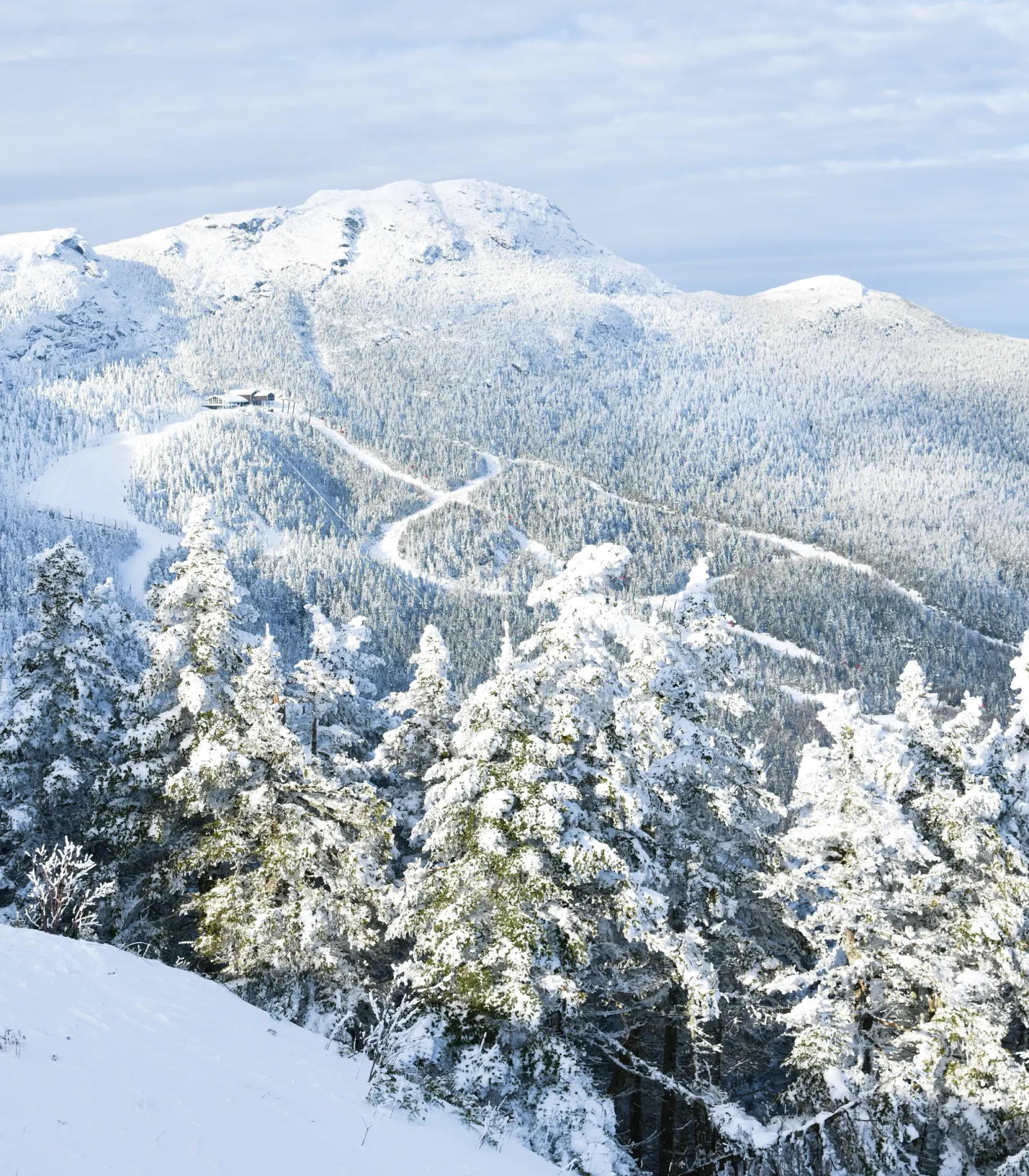
Stowe’s most extreme terrain is led by the Front Four, four challenging ski runs known for their exposure, tight trees, moguls, and steeps. Of them, Goat is typically considered the hardest run, due to its narrowness, frequent icy conditions, and steep 36-degree pitch. Starr and National have steep bumps that are often icy, rocky, and thin, while the gentlest of the four, Liftline is extra steep.
Body Bag Glades
Crested Butte, Colorado
- Epic
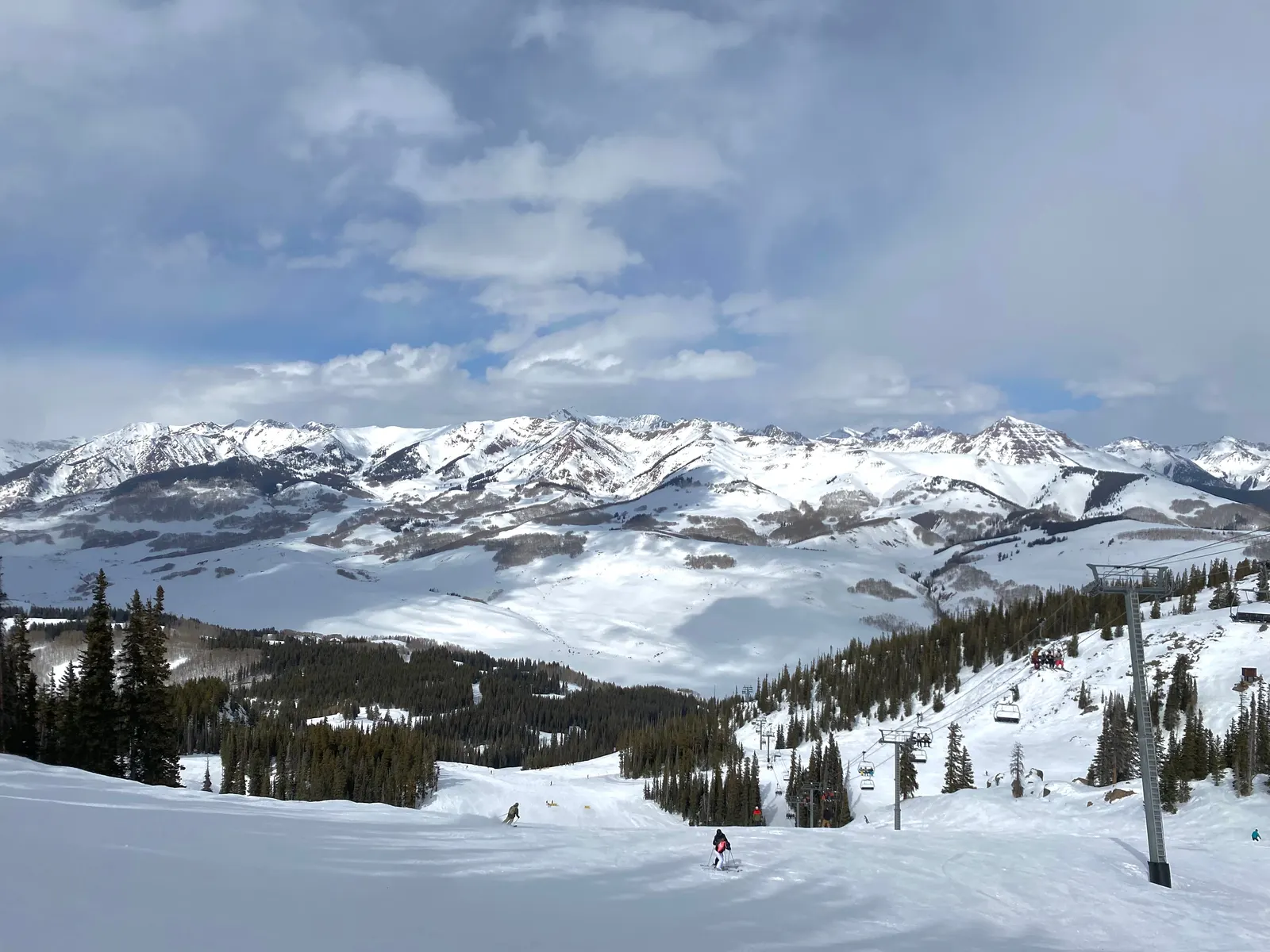
The terrain at Crested Butte Mountain Resort tends to be a bit wilder than most ski areas, with rocky entrances at the top of runs and plenty of narrow chutes and cliffs to navigate. It’s the reason why the ski area is known as the birthplace of inbounds extreme skiing. Crested Butte still lives up to its moniker, with 62 percent of its total skiable terrain rated single or double black diamond.
The locally known and named Body Bag Glades is so hazardous that you won’t find it on the official ski map, but you will find Rambo, the steepest lift-served tree-cut ski trail in the U.S., which has an average pitch of 55 degrees and terrain that is peppered with stumps, exposed rocks, and natural moguls.
Devil's Den
Killington, Vermont
- Ikon
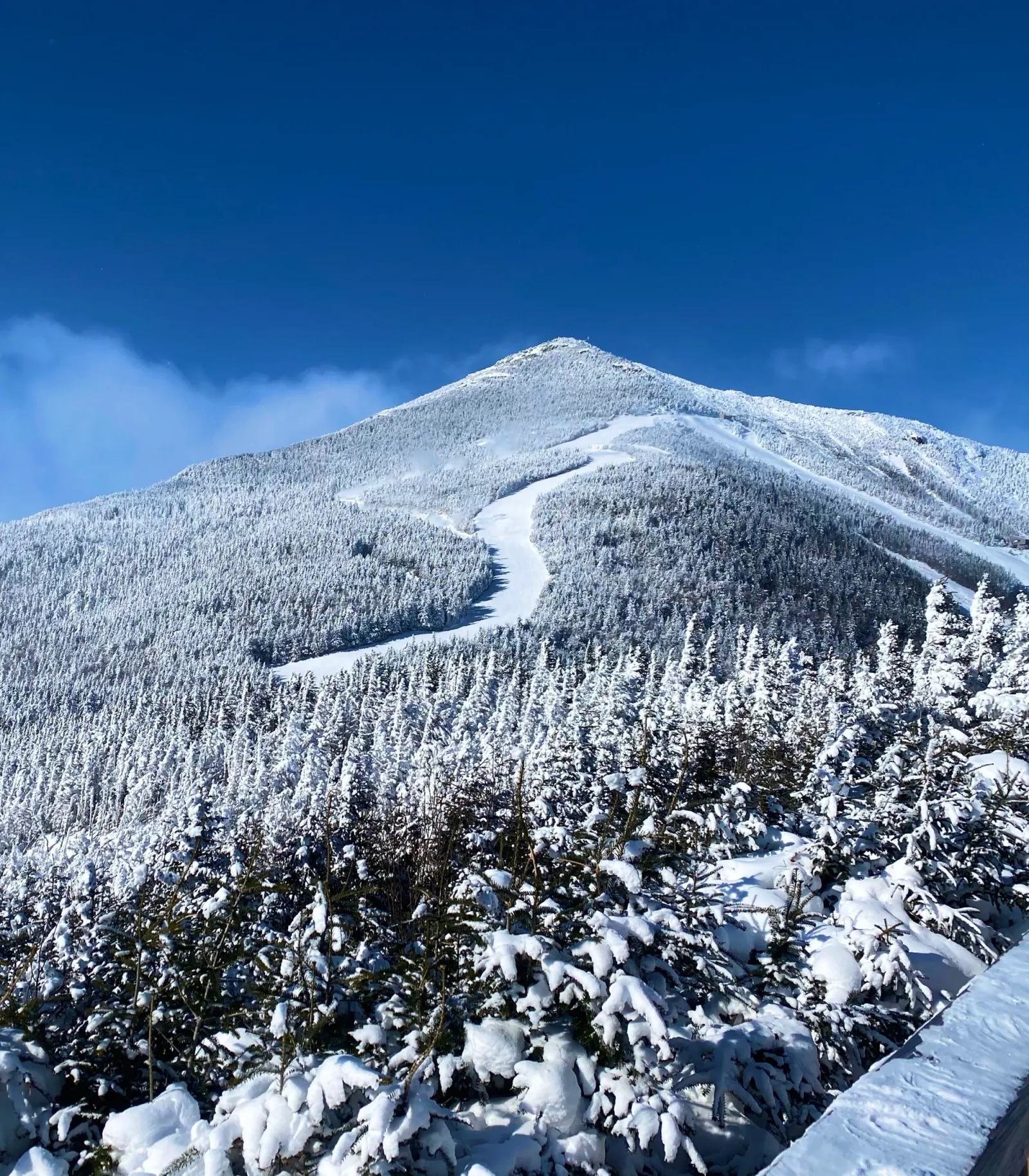
With a nickname like Beast of the East, Killington Resort has a reputation to live up to. The ski area holds the title of the largest ski area in the eastern U.S. (1,977 acres ) with the largest vertical drop in New England (3,050 feet). It translates to plenty of challenging terrain, especially when it comes to steep mogul skiing.
A few Killington favorites for advanced skiers include Outer Limits, Devil’s Den, Devil’s Fiddle, and Double Dipper, with the largest share of the resort’s most advanced terrain situated on Killington Peak and Bear Mountain.
Explore other itineraries
Guides
For Skiers Who Want More: The Best Advanced Terrain in North America
Some mountains simply ski harder, with high-consequence drop-ins and narrow couloirs that demand precision and confidence. While these ski areas have plenty of terrain for beginner and intermediate riders, they’re best known for attracting advanced and expert skiers looking for an additional thrill or the satisfaction that comes from getting safely to the bottom of a hard-to-ski line.
At these ski areas, skiers and riders looking to move beyond the relative comfort of standard black-diamond runs will find terrain that tests their skill and their nerve. Some mountains are so challenging that advanced and expert runs account for 50 percent of the ski resort’s skiable acreage, while others are defined by notoriously difficult runs where tight trees, narrow couloirs, cliff drops, and entry points with nonnegotiable free fall separate the adventurous from the truly experienced.
S&S Couloir
Jackson Hole, Wyoming
- Ikon
- Mountain Collective
This list wouldn’t be complete without Jackson Hole Mountain Resort, which is arguably the most recognizable expert-ski destination in North America. The mountain is famously home to Corbet’s Couloir, a narrow chute that is only accessible by dropping off a massive snow cornice above and free falling for up to 20 feet. (It’s also the site of the annual, invite-only Kings & Queens of Corbet’s event in February, where experienced freeriders throw down their best trick as they launch themselves into the couloir.) But the often-overlooked S&S Couloir, which sits right next to Corbet’s, is considered much more difficult and is only attempted by a few people each winter.
Jackson’s couloirs get all the attention but the entire ski area is riddled with challenging, travel-worthy terrain. Of the mountain’s 2,500 acres of inbound terrain, 50 percent has a black diamond rating, and it all skis steep with one of the biggest vertical drops in the U.S. at 4,139 feet.
Little Couloir
Big Sky, Montana
- Ikon
- Mountain Collective
Like Jackson, half of the terrain at Big Sky Resort has a black-diamond rating. But at Big Sky, they take it a step further by adding a three black diamond rating to certain runs. This extra-extreme terrain starts at the top of the Lone Peak Tram and feeds into the Big Couloir and the Upper A-Z Chutes. The Little Couloir, to the looker’s left of the Big Couloir, isn’t even on the ski area’s official trail map because it’s only open a few days a year and is the epitome of extreme, high-consequence skiing.
Big Sky also has a lot of terrain to explore, 5,850-acres of it, with a huge vertical drop of 4,350 feet.
Senior's (Palmyra Peak)
Telluride, Colorado
- Epic
What makes Telluride Ski Resort stand out is its expansive hike-to terrain and the fact that you can ski off a 13,000-foot mountain peak without going out of bounds or into the backcountry. Palmyra Peak, which stands at 13,150 feet and is a 90-minute hike from the chairlift, is where the mountain’s hardest run, Senior’s, can be found. Senior’s runs through a narrow couloir and is considered to have a 52-degree pitch.
On either side of Palmyra Peak is additional hike-to terrain, including narrow chutes that are accessed by the Stairway to Heaven, a 126-foot metal staircase and bridge that’s bolted into the ridgeline.
Telluride is smaller than Jackson or Big Sky, but generally steeper, with 4,425 feet of vertical gain. Of the ski area’s 2,000 skiable acres, 41 percent is rated as expert.
Kiwi Flats
Mammoth, California
- Ikon
Mammoth Mountain is one of the rare mountains that has both steep, advanced ski runs and renowned terrain parks that keep even the best park skiers challenged. For the former, head to Cornice Bowl or visit Paranoid Flats and Kiwi Flats (which are not flat at all). Kiwi Flats is a mind-spinningly long couloir with a cliff in the middle. Another extreme Mammoth favorite is Hangman’s Hollow, which provides mandatory air on entry and requires skiers to fully commit.
Mammoth is also home to the Unbound Terrain Parks, which include two black-diamond-rated parks—Main Park and The Hemlocks—among its 10 total. The massive network has more than 80 features, including two halfpipes.
Filip's Leap (Highland Bowl at Aspen Highlands)
Aspen Snowmass, Colorado
- Ikon
- Mountain Collective
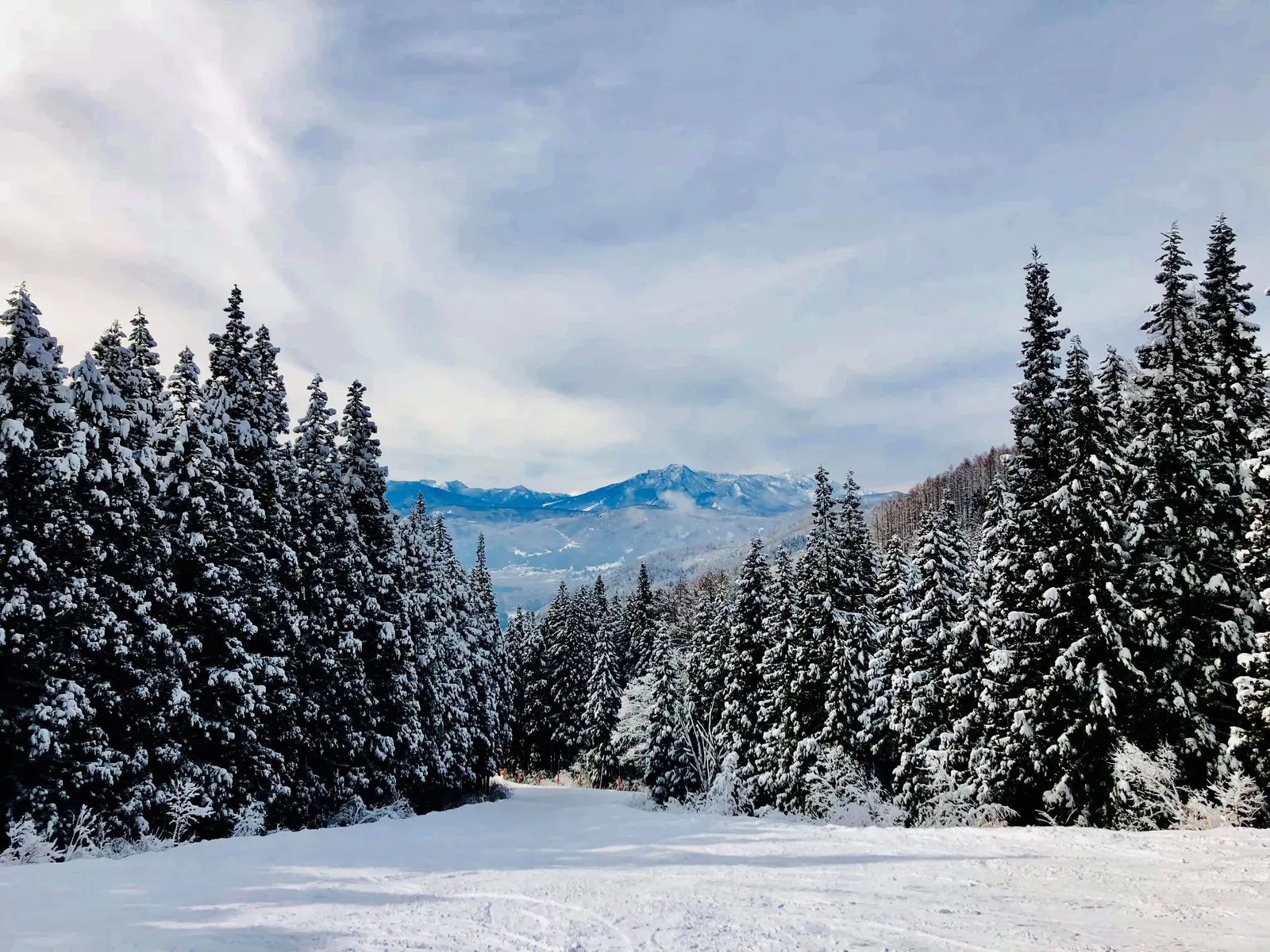
Aspen Snowmass is made up of four mountains: Aspen Highlands, Aspen Mountain (aka Ajax), Snowmass, and Buttermilk. All but Buttermilk are known for their steep, advanced terrain, particularly Aspen Highlands, which is home to Highland Bowl, a hike-to descent with a challenging 2,500-foot drop from a 12,392-foot summit.
Nearby Aspen Mountain is known for its tight trees and bump runs, including the Elevator Shaft section of Silver Queen, a steep 42-degree slope. Snowmass, the largest of the four, keeps expert skiers challenged with Hanging Valley, the Cirque, and the Headwall—along with Burn Cliffs, accessed via the Cirque, which has been named among the hardest runs in the valley.
Goat
Stowe, Vermont
- Epic
For advanced skiers and riders, ski areas in the West are often at the top of the list, but Vermont’s Stowe Mountain Resort is one of the few that breaks the pattern. It’s split between Spruce Peak and Mount Mansfield, Vermont’s highest point, and has challenges most West Coast skiers don’t have to contend with, including ice and narrow runs that require superior edge control.
Stowe’s most extreme terrain is led by the Front Four, four challenging ski runs known for their exposure, tight trees, moguls, and steeps. Of them, Goat is typically considered the hardest run, due to its narrowness, frequent icy conditions, and steep 36-degree pitch. Starr and National have steep bumps that are often icy, rocky, and thin, while the gentlest of the four, Liftline is extra steep.
Body Bag Glades
Crested Butte, Colorado
- Epic
The terrain at Crested Butte Mountain Resort tends to be a bit wilder than most ski areas, with rocky entrances at the top of runs and plenty of narrow chutes and cliffs to navigate. It’s the reason why the ski area is known as the birthplace of inbounds extreme skiing. Crested Butte still lives up to its moniker, with 62 percent of its total skiable terrain rated single or double black diamond.
The locally known and named Body Bag Glades is so hazardous that you won’t find it on the official ski map, but you will find Rambo, the steepest lift-served tree-cut ski trail in the U.S., which has an average pitch of 55 degrees and terrain that is peppered with stumps, exposed rocks, and natural moguls.
Devil's Den
Killington, Vermont
- Ikon
With a nickname like Beast of the East, Killington Resort has a reputation to live up to. The ski area holds the title of the largest ski area in the eastern U.S. (1,977 acres ) with the largest vertical drop in New England (3,050 feet). It translates to plenty of challenging terrain, especially when it comes to steep mogul skiing.
A few Killington favorites for advanced skiers include Outer Limits, Devil’s Den, Devil’s Fiddle, and Double Dipper, with the largest share of the resort’s most advanced terrain situated on Killington Peak and Bear Mountain.
Explore other itineraries