Intel
Super-El Niño and Mammoth Snowfall: How to Prepare (and Reap the Rewards)
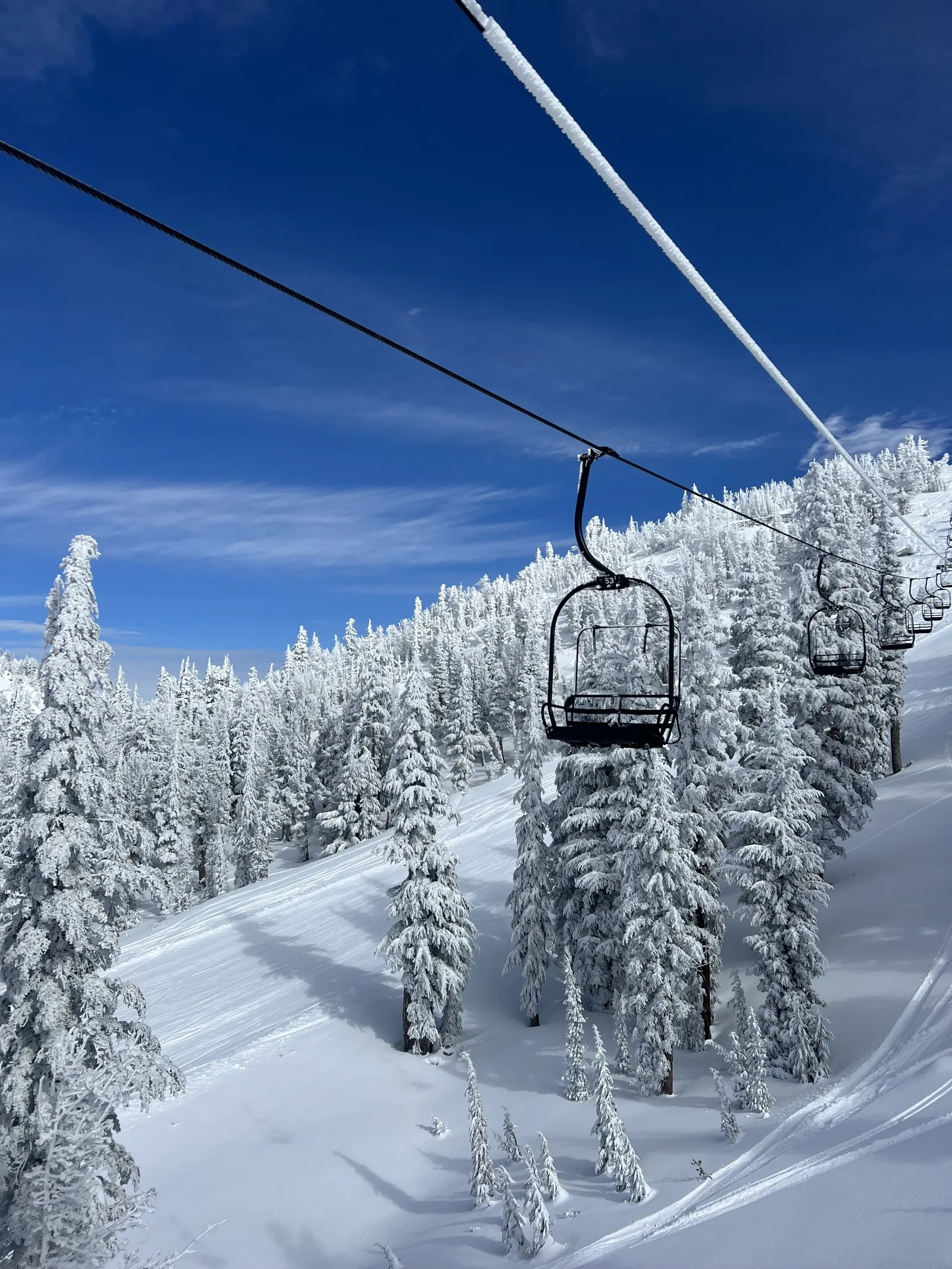
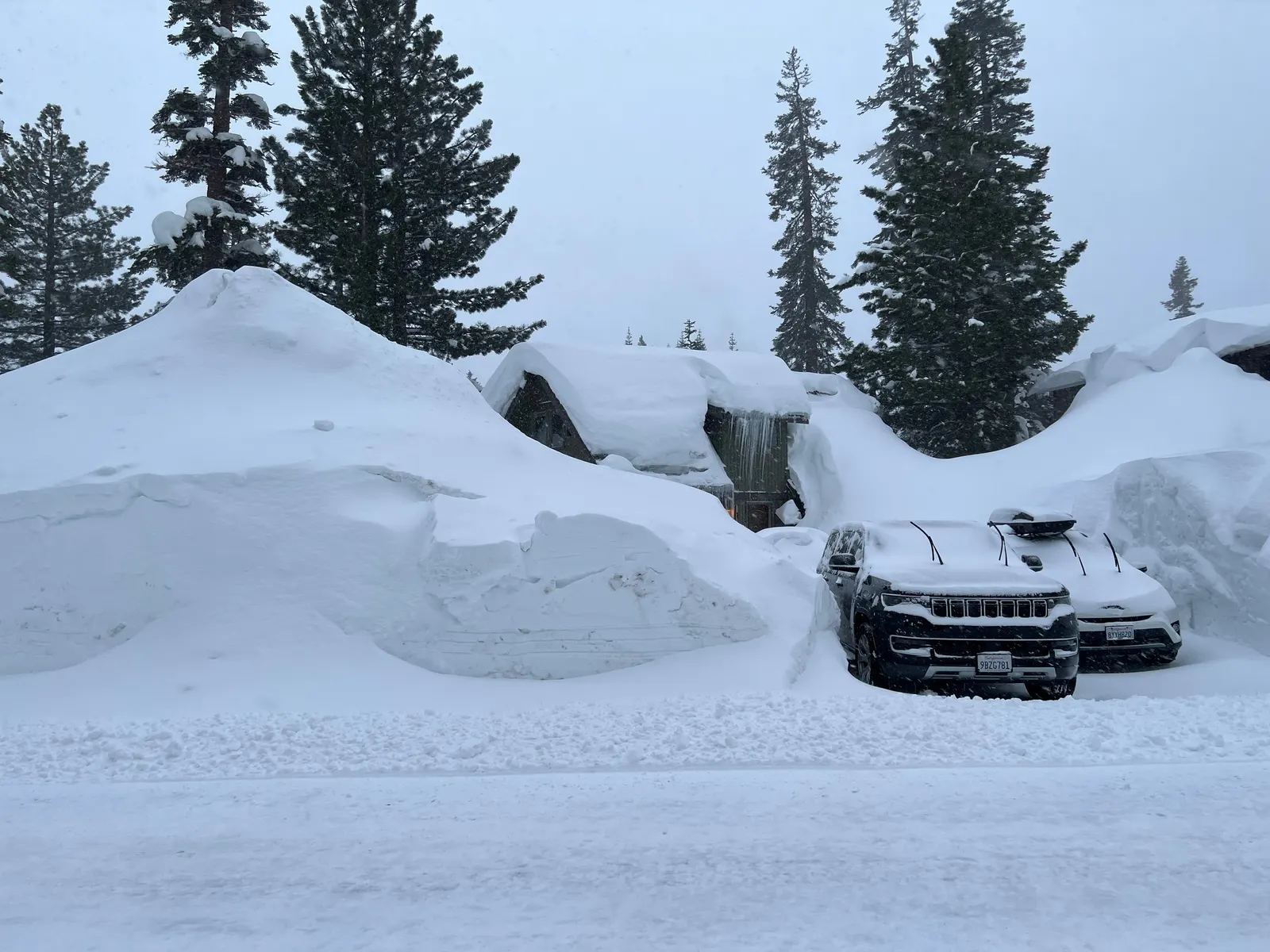
The winter of 2022-23 went by in a blur for Mammoth Lakes locals. Everything revolved around the snow. If you weren’t skiing, you were shoveling. If you weren’t shoveling, you were getting buried by more than 715 inches of snow that fell over the course of the season. FEMA declared the deluge a national emergency, and those who lived through it had to adapt to handle the colossal storms. Once we dialed in our systems, we had the time of our lives, skiing endless storm days that turned into a perpetual spring, with soft corn laps stretching all the way into August.
That winter wasn’t actually an El Niño season, let alone a so-called Super El Niño. But the giant warm mass in the Pacific is hinting at a barrel of record moisture that’s pointed right at the Eastern Sierra, and we may have quite a winter on our hands again. NOAA’s Climate Prediction Center gave better-than-even odds of a very strong event this November through January, the kind that would rank among the biggest since record-keeping began in 1950.
A quick reality check before we get carried away: El Niño tips the odds, it doesn’t write the forecast. Big ones have buried the Sierra (1982-83 is still legendary), strong El Niño winters have underwhelmed, and 2022-23 was actually a neutral-leaning La Niña year. But if this winter brings a parade of atmospheric rivers, you want to be ready. Here’s what I learned living through the big one, and how to stay safe and still have a blast if the 10-foot storms roll in.
Stock your car and master your chains
Plan ahead
If you’re driving up from LA, the Bay Area, or Reno, your car is your lifeline. Treat it like a piece of backcountry gear. During huge storm cycles, the 395 can close between June Lake and Bishop, and supplies at Mammoth’s grocery stores can run low. I recommend hitting Vons at home before heading up (it’s cheaper, too).
What lives in my car from November to April:
• Chains that fit your tires (check the size on the sidewall before you buy, not at the turnout)
• A sturdy shovel and a long-handled snow brush
• Waterproof gloves and a cheap foam kneeling pad
• A headlamp, because you’ll always be chaining up in the dark
• A warm blanket or sleeping bag, extra layers, and a hat
• Water and a few days’ worth of snacks
• A phone charger and a small battery bank
• A bag of sand or kitty litter for traction if you get stuck
• Winter-rated windshield washer fluid and an extra jug
Keep the gas tank filled above half. If you get stuck and run the engine for heat, clear the snow away from your tailpipe first and crack a window. A buried exhaust is a carbon monoxide trap.
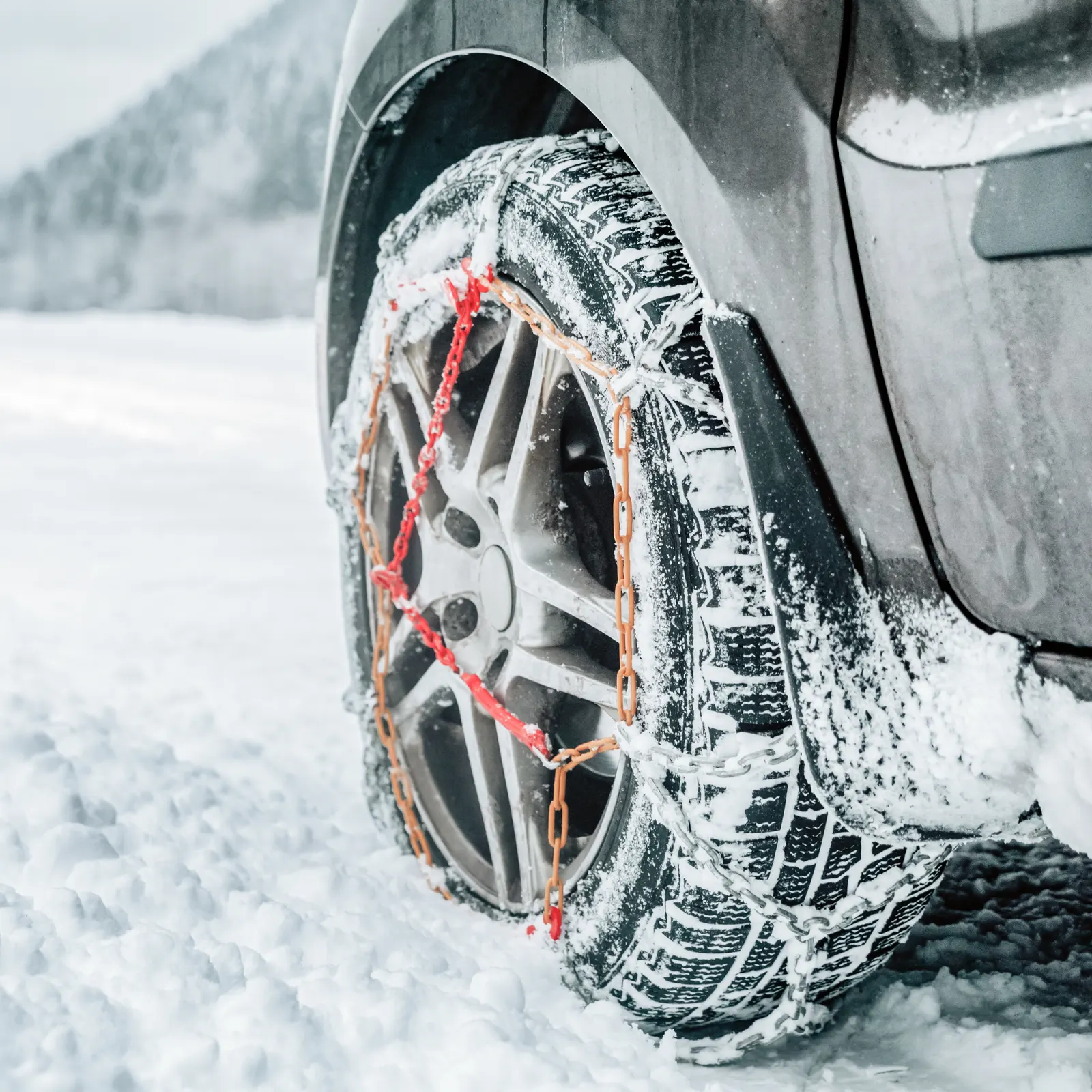
Know the chain codes. Caltrans uses three levels. Under R1, chains are required, but passenger cars and light trucks with snow-tread tires can usually go without. R2 means chains on everything except four-wheel or all-wheel drive vehicles with snow tires on all four wheels (and even those still have to carry a set of chains inside the car). Your Subaru isn’t exempt unless it has real winter tires, not all-seasons. R3 means chains on every vehicle, no exceptions, and a road often closes before it ever gets there. Highway 203 into town and up to the Main Lodge sees all three. Check Caltrans QuickMap or call 1-800-427-ROAD before you leave, and again in Bishop.
Practice before you need it. The worst place to put on chains for the first time is a dark, icy turnout on 395 with trucks blasting by. Do a dry run in your driveway at home, as if you’re pulling fully off the road into a chain-up area, setting the parking brake, and turning on your hazards.
Lay the chains out flat and untangled, hooks facing out. Drape them over the top of the drive tires (the front wheels on most front-wheel drive cars; check your manual for others) and tuck them behind the tire. Connect the inside hook first, then the outside one, as snugly as you can. Drive forward a few feet, stop, and tighten again—most chains loosen as they settle. Keep it under 30 mph, and if you hear slapping, stop and fix it before it chews up your wheel well.
If you’d rather pay a pro, chain installers work most turnouts. You’ll certainly find one at the bottom of the Sherwin Grade when driving north out of Bishop and at the beginning of the 203 in Mammoth. They’re independent businesses, not Caltrans employees, and they can’t sell or rent you chains, so bring your own.
Always keep a reliable shovel in your car. I like a Tuffy, which is ergonomic and impossible to break. Often I’ll also keep an extra metal avalanche shovel in the trunk just in case.

The best indoor plays
When the lifts are on hold
Some storm days, the mountain just doesn’t open. Wind holds, avalanche control, and plows that can’t keep up with the parking lots can and will happen. In 2023 there were stretches where getting from your condo to the corner store felt like an arctic expedition. Here’s how to keep the stoke alive without going stir-crazy.
Go bowling. Mammoth Rock 'n' Bowl is the classic storm-day hangout, with lanes downstairs and the excellent Brasserie, a fancy French bistro upstairs. It fills up fast when the lifts are closed, so go early and secure your lane.
Catch a movie. Minaret Cinemas is a total gem, with friendly staff and comfy reclining seats. While it only has two screens, one of them is almost always reserved for kids movies, while the other tends to show big blockbusters. Nothing beats hot buttered popcorn on a blustery storm day.
Hit the brewery. Mammoth Brewing Company on Main Street is where half of town ends up when the mountain shuts down. Grab a pint, a plate of something warm, (I love the hot chicken sandwich) and swap “Did you see that Corolla stuck in a ditch?” stories.
Tune your gear. A storm day is a gift for the quiver. Wax your skis, sharpen your board’s edges, and dry out your boots. You’ll thank yourself when the sun pops tomorrow. If you have boot issues, spend some proper time at Footloose Sports getting dialed in by Ryan or Van.
Curl up with a good book. Nothing screams hygge when the weather is nasty like a hot mug of tea, a roaring wood fire, and a book. Mammoth is blessed to have an awesome little independent book store, The Booky Joint, which is stuffed with new and used books, puzzles, board games, and ski magazines. If you want a recommendation, ask Tanner.
Grab a bite at the coziest spot in town. Dos Alas, out in the Sherwin Meadow, is pure comfort. A Cuban and Puerto Rican restaurant specializing in stewy picadillo, bright and briny escabeches, and the best Cubano sandwich outside of Havana. The restaurant’s warm ambiance and live music will break any chill.
One rule: Call ahead or check social media before you go anywhere. Businesses lose power and staff get snowed in, too. Hours during big storms are more like suggestions.
How to storm-ski Mammoth
The fun part
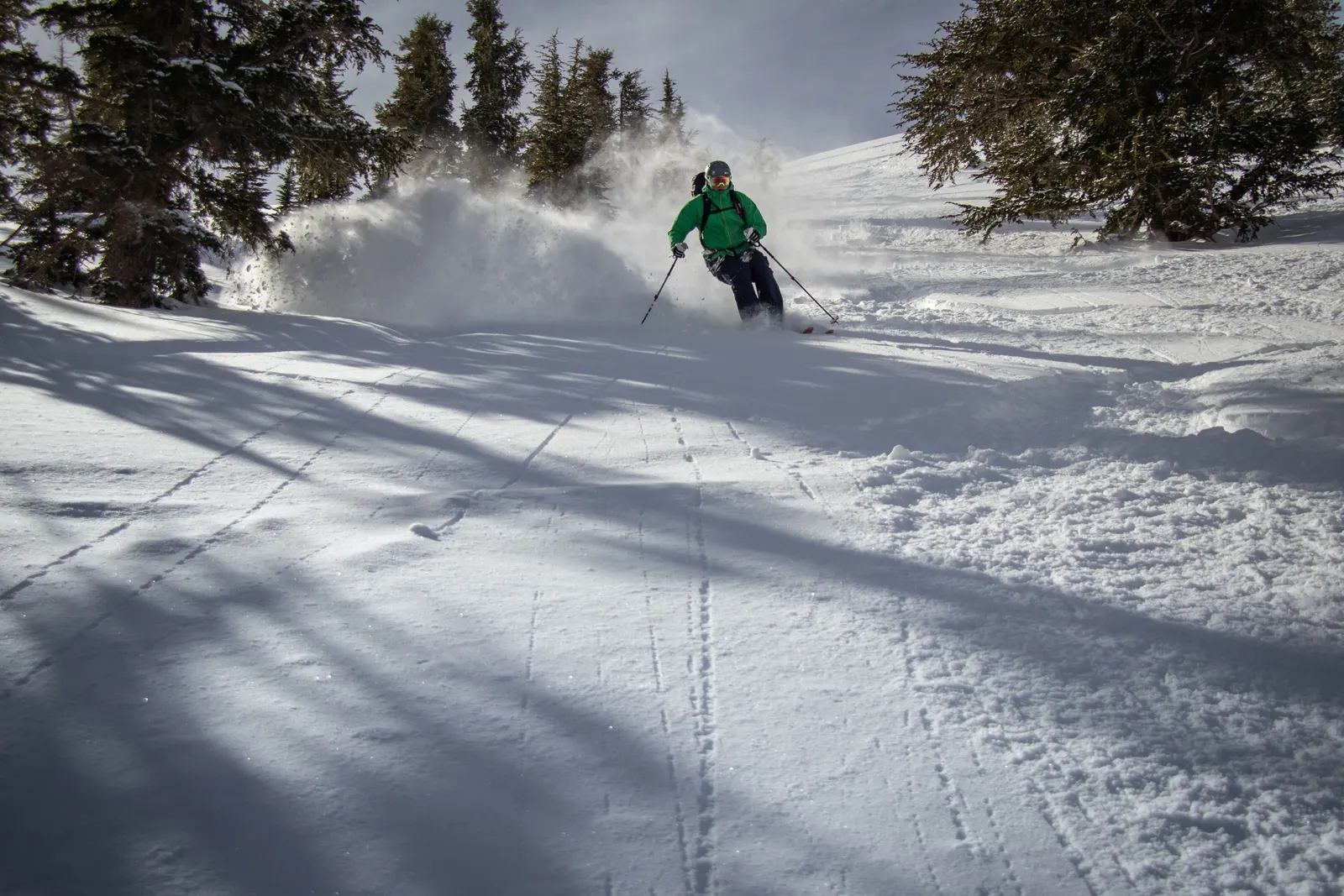
When it’s dumping and the upper mountain is socked in, Mammoth turns into a tree-skiing playground. The trick is knowing where to go and how not to get hurt.
Head for the trees. Visibility is everything on a storm day, and trees give you contrast that open bowls never will. Chair 22 on Lincoln Mountain is the undisputed storm-day king. It's sheltered, the tree runs refill all day, and it's often spinning when the gondola and Chair 23 are on hold. Expect lines on weekends; midweek it’'s heaven. Roller Coaster Express and Chair 25 have friendlier gladed terrain if you’'re newer to the trees, and the old-growth Jeffrey pines on the east side of Lincoln are thick and sheltered, so they hold cold snow and block the wind. Here’s a real secret: When Chair 5 pops, it’ll be tempting to leave Lincoln in search of fresh snow closer to the top. Don’t do it. Chairs 22 and 25 have so many hidden stashes that you’re better off letting the crowds disperse and stick around the best terrain with no lift lines.
Be patient with openings. Patrol has to do avalanche control after big storms, and lifts open in stages. Follow Mammoth’s lift status and social feeds, and don’t burn your legs on the first open chair if your favorite is likely to pop at 11am.
Respect tree wells and deep snow. The deep, unconsolidated snow around the base of trees can trap you upside down, and in a winter like 2023, those wells were huge. Always ski powder with a partner, stay within sight and earshot of each other, and consider wearing a whistle to alert your partner in case of a crash without tiring yourself out yelling. If you do fall in, try to keep your airway clear and stay calm. Wait for your partner to dig you out.
Respect the ropes. Closed means closed. After storm cycles, slopes can be loaded and unstable even inside the resort boundary until patrol clears them.
Gear up for flat light. Pack goggles with a low-light lens, plus a spare pair to swap when the first ones fog up. Wear a buff or face mask, and pick fat skis if you have them—rent some if you don’t.
Get there early, leave early. The parking lots and the roads home are the real cruxes of a storm day. Ride the town shuttles if you can, and plan your exit before the afternoon rush hits the 203.
The bottom line
The 2022-23 winter was challenging, but it was also unbelievably rewarding. I made close friends over woodstove fires and board games, skied endless pow laps on the hill, and explored more of the backcountry than I ever thought possible. Big winters, like I hope this one will be, don’t come around every year. If you can put in the proper planning, the rewards will be enormous.
Prep now, while the hardware store has shovels in stock. Then, when the storms line up off the coast, you can stop worrying about the logistics and focus on the only thing that matters: the next lap on 22.
See you in the trees.
Explore other itineraries
Intel
Super-El Niño and Mammoth Snowfall: How to Prepare (and Reap the Rewards)
The winter of 2022-23 went by in a blur for Mammoth Lakes locals. Everything revolved around the snow. If you weren’t skiing, you were shoveling. If you weren’t shoveling, you were getting buried by more than 715 inches of snow that fell over the course of the season. FEMA declared the deluge a national emergency, and those who lived through it had to adapt to handle the colossal storms. Once we dialed in our systems, we had the time of our lives, skiing endless storm days that turned into a perpetual spring, with soft corn laps stretching all the way into August.
That winter wasn’t actually an El Niño season, let alone a so-called Super El Niño. But the giant warm mass in the Pacific is hinting at a barrel of record moisture that’s pointed right at the Eastern Sierra, and we may have quite a winter on our hands again. NOAA’s Climate Prediction Center gave better-than-even odds of a very strong event this November through January, the kind that would rank among the biggest since record-keeping began in 1950.
A quick reality check before we get carried away: El Niño tips the odds, it doesn’t write the forecast. Big ones have buried the Sierra (1982-83 is still legendary), strong El Niño winters have underwhelmed, and 2022-23 was actually a neutral-leaning La Niña year. But if this winter brings a parade of atmospheric rivers, you want to be ready. Here’s what I learned living through the big one, and how to stay safe and still have a blast if the 10-foot storms roll in.
Stock your car and master your chains
Plan ahead
If you’re driving up from LA, the Bay Area, or Reno, your car is your lifeline. Treat it like a piece of backcountry gear. During huge storm cycles, the 395 can close between June Lake and Bishop, and supplies at Mammoth’s grocery stores can run low. I recommend hitting Vons at home before heading up (it’s cheaper, too).
What lives in my car from November to April:
• Chains that fit your tires (check the size on the sidewall before you buy, not at the turnout)
• A sturdy shovel and a long-handled snow brush
• Waterproof gloves and a cheap foam kneeling pad
• A headlamp, because you’ll always be chaining up in the dark
• A warm blanket or sleeping bag, extra layers, and a hat
• Water and a few days’ worth of snacks
• A phone charger and a small battery bank
• A bag of sand or kitty litter for traction if you get stuck
• Winter-rated windshield washer fluid and an extra jug
Keep the gas tank filled above half. If you get stuck and run the engine for heat, clear the snow away from your tailpipe first and crack a window. A buried exhaust is a carbon monoxide trap.
Know the chain codes. Caltrans uses three levels. Under R1, chains are required, but passenger cars and light trucks with snow-tread tires can usually go without. R2 means chains on everything except four-wheel or all-wheel drive vehicles with snow tires on all four wheels (and even those still have to carry a set of chains inside the car). Your Subaru isn’t exempt unless it has real winter tires, not all-seasons. R3 means chains on every vehicle, no exceptions, and a road often closes before it ever gets there. Highway 203 into town and up to the Main Lodge sees all three. Check Caltrans QuickMap or call 1-800-427-ROAD before you leave, and again in Bishop.
Practice before you need it. The worst place to put on chains for the first time is a dark, icy turnout on 395 with trucks blasting by. Do a dry run in your driveway at home, as if you’re pulling fully off the road into a chain-up area, setting the parking brake, and turning on your hazards.
Lay the chains out flat and untangled, hooks facing out. Drape them over the top of the drive tires (the front wheels on most front-wheel drive cars; check your manual for others) and tuck them behind the tire. Connect the inside hook first, then the outside one, as snugly as you can. Drive forward a few feet, stop, and tighten again—most chains loosen as they settle. Keep it under 30 mph, and if you hear slapping, stop and fix it before it chews up your wheel well.
If you’d rather pay a pro, chain installers work most turnouts. You’ll certainly find one at the bottom of the Sherwin Grade when driving north out of Bishop and at the beginning of the 203 in Mammoth. They’re independent businesses, not Caltrans employees, and they can’t sell or rent you chains, so bring your own.
Always keep a reliable shovel in your car. I like a Tuffy, which is ergonomic and impossible to break. Often I’ll also keep an extra metal avalanche shovel in the trunk just in case.
The best indoor plays
When the lifts are on hold
Some storm days, the mountain just doesn’t open. Wind holds, avalanche control, and plows that can’t keep up with the parking lots can and will happen. In 2023 there were stretches where getting from your condo to the corner store felt like an arctic expedition. Here’s how to keep the stoke alive without going stir-crazy.
Go bowling. Mammoth Rock 'n' Bowl is the classic storm-day hangout, with lanes downstairs and the excellent Brasserie, a fancy French bistro upstairs. It fills up fast when the lifts are closed, so go early and secure your lane.
Catch a movie. Minaret Cinemas is a total gem, with friendly staff and comfy reclining seats. While it only has two screens, one of them is almost always reserved for kids movies, while the other tends to show big blockbusters. Nothing beats hot buttered popcorn on a blustery storm day.
Hit the brewery. Mammoth Brewing Company on Main Street is where half of town ends up when the mountain shuts down. Grab a pint, a plate of something warm, (I love the hot chicken sandwich) and swap “Did you see that Corolla stuck in a ditch?” stories.
Tune your gear. A storm day is a gift for the quiver. Wax your skis, sharpen your board’s edges, and dry out your boots. You’ll thank yourself when the sun pops tomorrow. If you have boot issues, spend some proper time at Footloose Sports getting dialed in by Ryan or Van.
Curl up with a good book. Nothing screams hygge when the weather is nasty like a hot mug of tea, a roaring wood fire, and a book. Mammoth is blessed to have an awesome little independent book store, The Booky Joint, which is stuffed with new and used books, puzzles, board games, and ski magazines. If you want a recommendation, ask Tanner.
Grab a bite at the coziest spot in town. Dos Alas, out in the Sherwin Meadow, is pure comfort. A Cuban and Puerto Rican restaurant specializing in stewy picadillo, bright and briny escabeches, and the best Cubano sandwich outside of Havana. The restaurant’s warm ambiance and live music will break any chill.
One rule: Call ahead or check social media before you go anywhere. Businesses lose power and staff get snowed in, too. Hours during big storms are more like suggestions.
How to storm-ski Mammoth
The fun part
When it’s dumping and the upper mountain is socked in, Mammoth turns into a tree-skiing playground. The trick is knowing where to go and how not to get hurt.
Head for the trees. Visibility is everything on a storm day, and trees give you contrast that open bowls never will. Chair 22 on Lincoln Mountain is the undisputed storm-day king. It's sheltered, the tree runs refill all day, and it's often spinning when the gondola and Chair 23 are on hold. Expect lines on weekends; midweek it’'s heaven. Roller Coaster Express and Chair 25 have friendlier gladed terrain if you’'re newer to the trees, and the old-growth Jeffrey pines on the east side of Lincoln are thick and sheltered, so they hold cold snow and block the wind. Here’s a real secret: When Chair 5 pops, it’ll be tempting to leave Lincoln in search of fresh snow closer to the top. Don’t do it. Chairs 22 and 25 have so many hidden stashes that you’re better off letting the crowds disperse and stick around the best terrain with no lift lines.
Be patient with openings. Patrol has to do avalanche control after big storms, and lifts open in stages. Follow Mammoth’s lift status and social feeds, and don’t burn your legs on the first open chair if your favorite is likely to pop at 11am.
Respect tree wells and deep snow. The deep, unconsolidated snow around the base of trees can trap you upside down, and in a winter like 2023, those wells were huge. Always ski powder with a partner, stay within sight and earshot of each other, and consider wearing a whistle to alert your partner in case of a crash without tiring yourself out yelling. If you do fall in, try to keep your airway clear and stay calm. Wait for your partner to dig you out.
Respect the ropes. Closed means closed. After storm cycles, slopes can be loaded and unstable even inside the resort boundary until patrol clears them.
Gear up for flat light. Pack goggles with a low-light lens, plus a spare pair to swap when the first ones fog up. Wear a buff or face mask, and pick fat skis if you have them—rent some if you don’t.
Get there early, leave early. The parking lots and the roads home are the real cruxes of a storm day. Ride the town shuttles if you can, and plan your exit before the afternoon rush hits the 203.
The bottom line
The 2022-23 winter was challenging, but it was also unbelievably rewarding. I made close friends over woodstove fires and board games, skied endless pow laps on the hill, and explored more of the backcountry than I ever thought possible. Big winters, like I hope this one will be, don’t come around every year. If you can put in the proper planning, the rewards will be enormous.
Prep now, while the hardware store has shovels in stock. Then, when the storms line up off the coast, you can stop worrying about the logistics and focus on the only thing that matters: the next lap on 22.
See you in the trees.
Explore other itineraries