Intel
How Snowmaking Works, and Why It Matters for Your Trip
Resorts use snowmaking to build an early-season base, hold coverage through dry stretches, and rebuild terrain when the weather doesn’t cooperate.
Check the mountain, not just the forecast
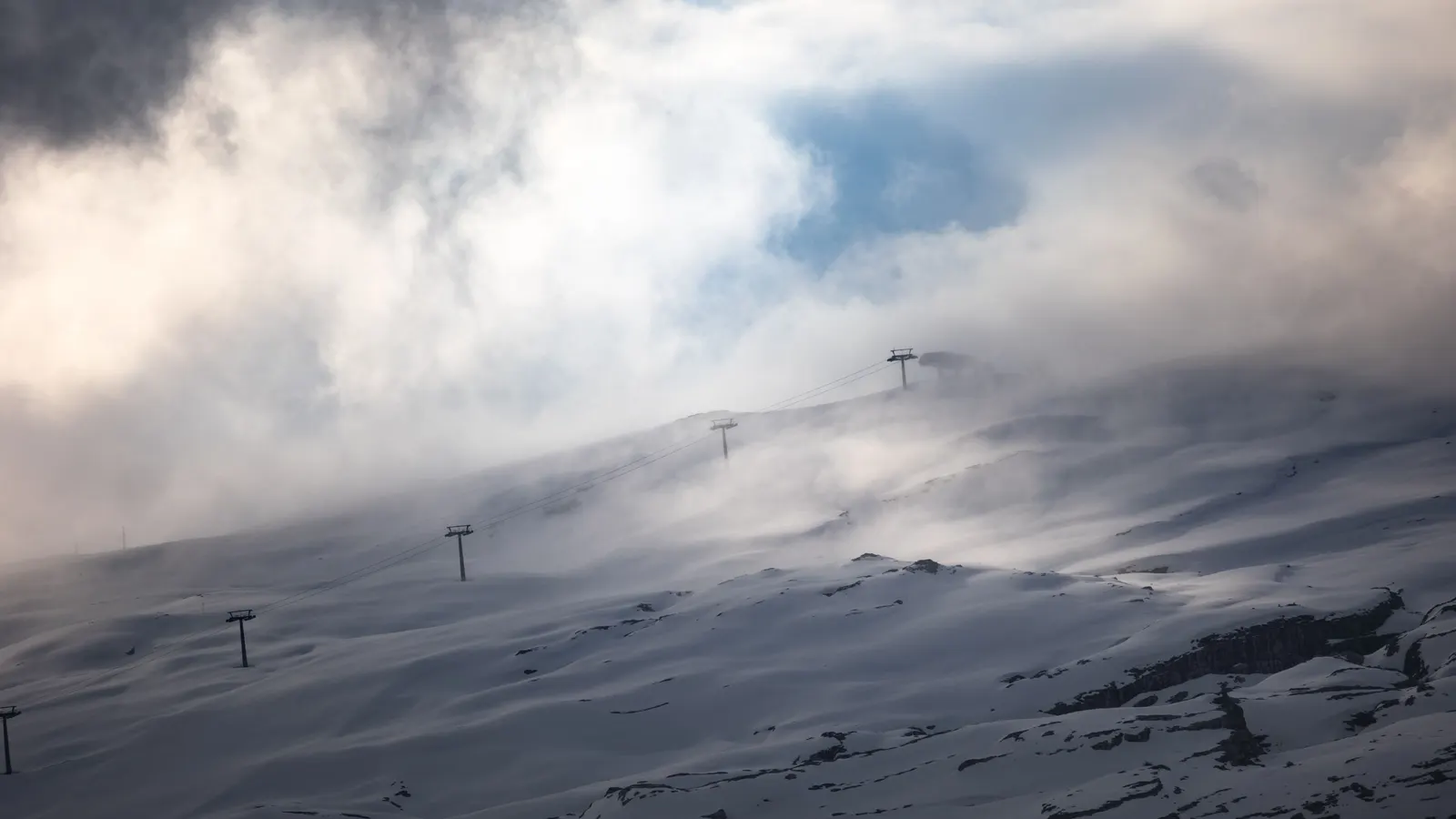
Snowfall is one input among several. A mountain can go a week without a storm and still ski well if snowmaking and grooming crews have been working.
Start with the resort’s trail report: how much terrain is open, which lifts are running, what was groomed overnight, and where crews are making snow. Then pull up the webcams. Watching people actually ski tells you more than another forecast refresh. Season snowfall totals are useful context, but they won’t tell you what you’ll find on the trail that morning.
The temperature that matters isn’t the one on your phone
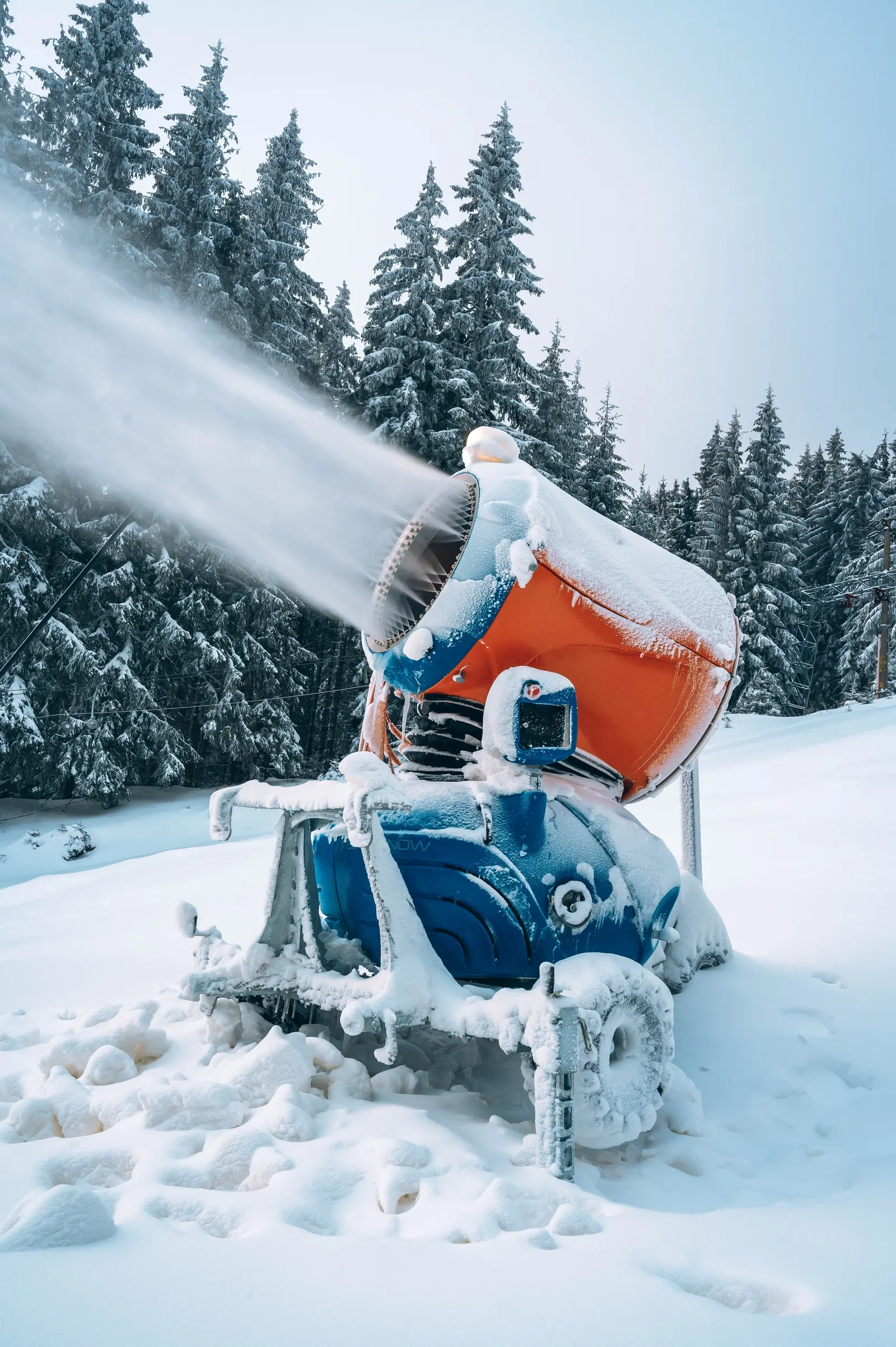
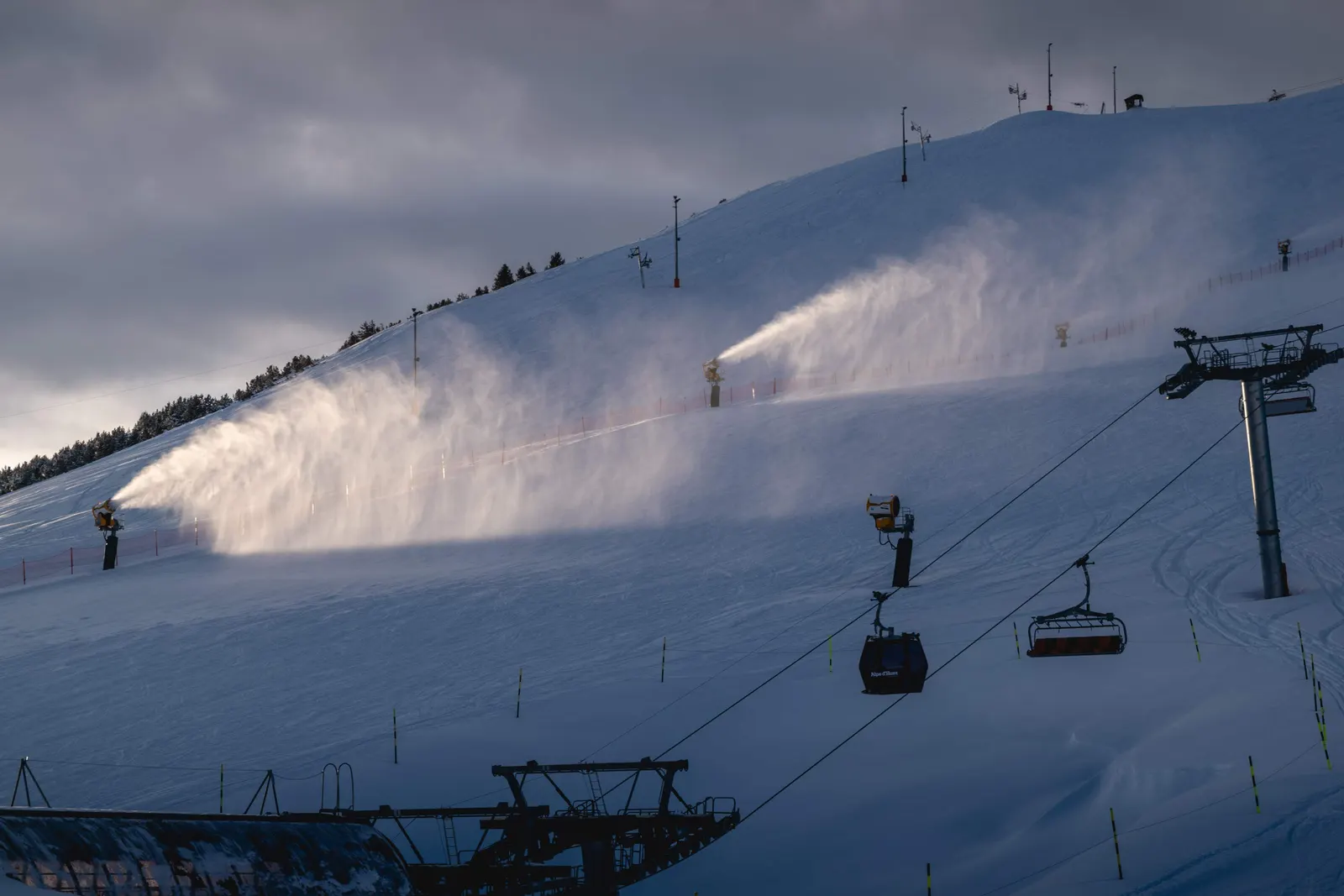
Snow guns spray water into cold air, where the droplets freeze before reaching the ground. Air-water guns use compressed air to break up the stream; fan guns use an onboard compressor and a fan to do the same job. Either way, whether it works depends on a measurement most people have never heard of.
Snowmaking crews watch the wet-bulb temperature, which combines air temperature and humidity into a single number. Dry air pulls moisture off faster than humid air, and that evaporative cooling is exactly what happens to a droplet leaving a snow gun. In dry air, the droplet sheds heat as it flies and freezes before landing. In humid air, it doesn’t, and it lands as water.
Wet bulb is always lower than the air temperature, and the gap widens as humidity falls. The industry threshold for firing up a system is roughly 27.5°F wet bulb, and colder produces more snow, faster. The practical upshot: a forecast showing 33°F can still be a productive snowmaking night if the air is dry enough. Cold alone isn’t the requirement, cold and dry is.
Crews also chase quality, not just volume. Very cold conditions produce light, dry snow that’s good for freshening a surface but poor for building a base. Early in the season, they want it slightly wetter so it packs into something durable.
Most of this happens overnight while the mountain is empty. You can go to bed with the guns running and wake up to meaningfully better coverage.
Machine-made snow does a different job
Natural powder gives you soft turns. Machine-made snow is denser and more durable, which makes it better for building a base, filling thin spots, and reinforcing trails that take heavy traffic.
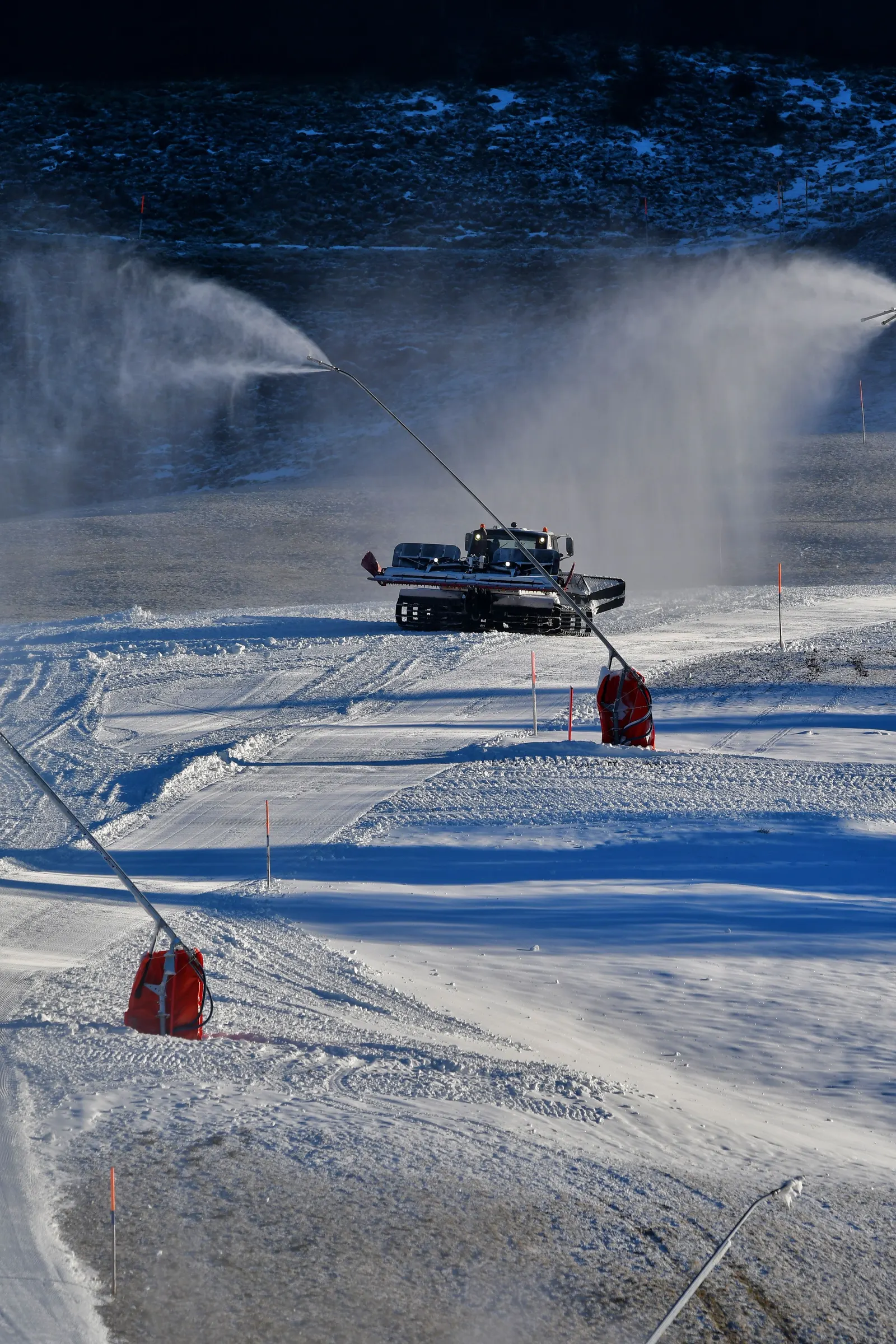
Once enough has been made, grooming crews spread it and work the surface with snowcats. That density is what lets a popular run hold up through thousands of turns on a busy weekend. Guns running before a holiday weekend is generally good news: the resort is putting snow on the terrain about to take the most abuse.
Leave room to adjust
Mountain forecasts change constantly, and the one you’re reading ten days out has plenty of time to be wrong in both directions.
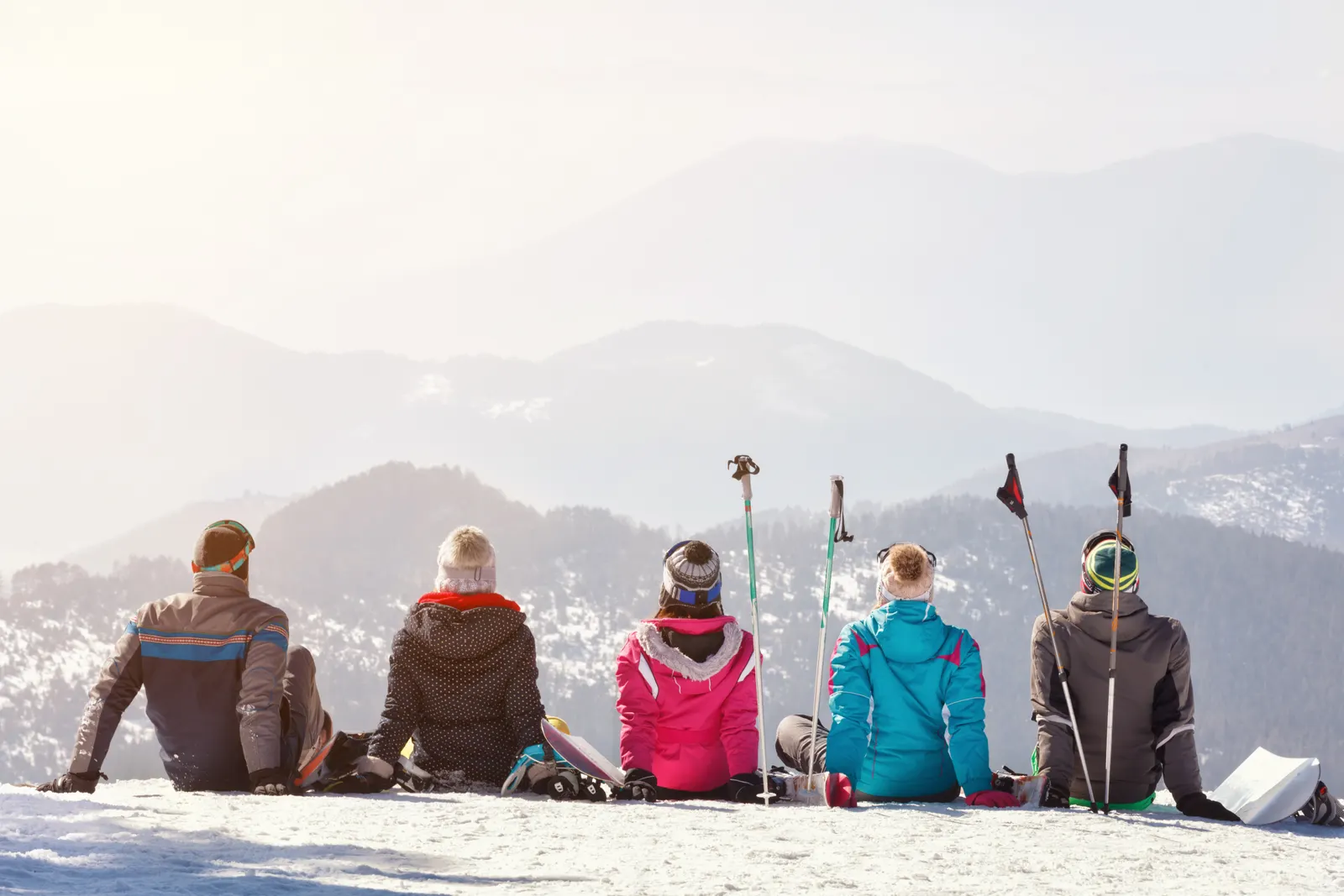
Give yourself room to play it by ear. Ski early if the morning is best. Take a long lunch if the weather turns. Head back to the house when your legs are done. Split up if some people want another lap and others are ready for après. Check the report again in the morning and make a new plan.
Where you stay can make that easier. If you’re close to the lifts, on a shuttle route, or ski-in/ski-out, you can take a good window without turning every change of plan into a logistics problem. That might matter most with a group, where the easier it is to come and go, the less pressure there is for everyone to ski the same hours or the same terrain.
Explore other itineraries
Intel
How Snowmaking Works, and Why It Matters for Your Trip
Resorts use snowmaking to build an early-season base, hold coverage through dry stretches, and rebuild terrain when the weather doesn’t cooperate.
Check the mountain, not just the forecast
Snowfall is one input among several. A mountain can go a week without a storm and still ski well if snowmaking and grooming crews have been working.
Start with the resort’s trail report: how much terrain is open, which lifts are running, what was groomed overnight, and where crews are making snow. Then pull up the webcams. Watching people actually ski tells you more than another forecast refresh. Season snowfall totals are useful context, but they won’t tell you what you’ll find on the trail that morning.
The temperature that matters isn’t the one on your phone
Snow guns spray water into cold air, where the droplets freeze before reaching the ground. Air-water guns use compressed air to break up the stream; fan guns use an onboard compressor and a fan to do the same job. Either way, whether it works depends on a measurement most people have never heard of.
Snowmaking crews watch the wet-bulb temperature, which combines air temperature and humidity into a single number. Dry air pulls moisture off faster than humid air, and that evaporative cooling is exactly what happens to a droplet leaving a snow gun. In dry air, the droplet sheds heat as it flies and freezes before landing. In humid air, it doesn’t, and it lands as water.
Wet bulb is always lower than the air temperature, and the gap widens as humidity falls. The industry threshold for firing up a system is roughly 27.5°F wet bulb, and colder produces more snow, faster. The practical upshot: a forecast showing 33°F can still be a productive snowmaking night if the air is dry enough. Cold alone isn’t the requirement, cold and dry is.
Crews also chase quality, not just volume. Very cold conditions produce light, dry snow that’s good for freshening a surface but poor for building a base. Early in the season, they want it slightly wetter so it packs into something durable.
Most of this happens overnight while the mountain is empty. You can go to bed with the guns running and wake up to meaningfully better coverage.
Machine-made snow does a different job
Natural powder gives you soft turns. Machine-made snow is denser and more durable, which makes it better for building a base, filling thin spots, and reinforcing trails that take heavy traffic.
Once enough has been made, grooming crews spread it and work the surface with snowcats. That density is what lets a popular run hold up through thousands of turns on a busy weekend. Guns running before a holiday weekend is generally good news: the resort is putting snow on the terrain about to take the most abuse.
Leave room to adjust
Mountain forecasts change constantly, and the one you’re reading ten days out has plenty of time to be wrong in both directions.
Give yourself room to play it by ear. Ski early if the morning is best. Take a long lunch if the weather turns. Head back to the house when your legs are done. Split up if some people want another lap and others are ready for après. Check the report again in the morning and make a new plan.
Where you stay can make that easier. If you’re close to the lifts, on a shuttle route, or ski-in/ski-out, you can take a good window without turning every change of plan into a logistics problem. That might matter most with a group, where the easier it is to come and go, the less pressure there is for everyone to ski the same hours or the same terrain.
Explore other itineraries